August 21, 2026
Modern infrastructure projects require construction materials that can support demanding schedules while providing reliable long-term performance. Roads, bridges, utility systems, foundations, and other structures frequently require excavation and backfilling, making the choice of backfill material an important part of project planning. Traditional methods can require significant labor and specialized equipment, particularly when crews must compact material around pipes or within confined spaces.
Flowable fill provides an alternative that can simplify these challenges. This cementitious material is designed to flow into excavated areas and voids, filling spaces around utilities and other structures with minimal mechanical compaction. A flowable fill company can provide the material, technical knowledge, delivery coordination, and application support needed to incorporate it into infrastructure work effectively.
According to Growth Market Reports, the global backfill flowable fill market reached approximately $4.45 billion in 2025 and is projected to reach $7.51 billion by 2034, representing a 5.9% compound annual growth rate as infrastructure and utility projects expand. This growth reflects increasing demand for practical backfill solutions as communities invest in transportation networks, underground utilities, and other essential infrastructure.
What Is a Flowable Fill Company and How Do They Operate?
A flowable fill company produces and supplies controlled mixtures of cementitious material, aggregates, water, and other components for use as backfill. Unlike conventional soil or aggregate, flowable fill is formulated to have a highly workable consistency that allows it to spread throughout an excavation and occupy spaces that can be difficult to reach with traditional materials.
The exact formulation depends on the project's requirements. Some applications call for relatively low-strength flowable fill that can be excavated later, while others require a stronger material capable of providing substantial structural support. The supplier works with contractors and project specifications to determine the appropriate mixture.
Beyond manufacturing the material, a flowable fill company typically coordinates delivery to the jobsite. Timing can be particularly important because crews may have limited windows for placing material before other construction activities need to begin.
Why Choose Flowable Fill Over Traditional Methods?
Traditional backfill materials can work well for many applications, but they generally require mechanical compaction to achieve the desired density. Crews may need to place soil or aggregate in multiple lifts, compact each layer, and verify that the specified density has been achieved.
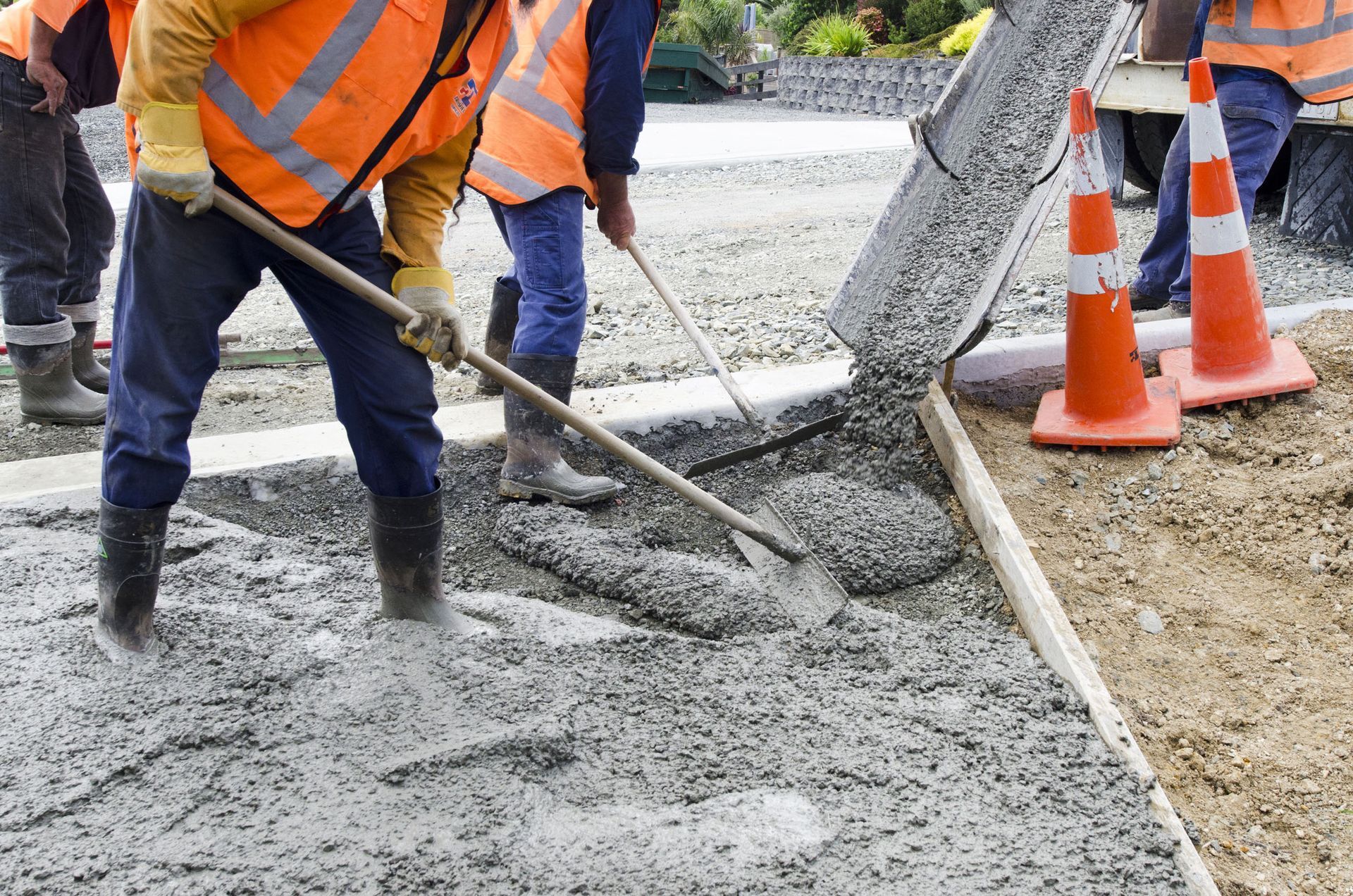
Flowable fill can reduce some of these requirements. Its ability to flow around pipes, conduits, foundations, and other obstacles allows it to fill irregular spaces without the same level of mechanical compaction. This can be especially valuable in narrow utility trenches where conventional equipment has limited access.
A flowable fill company can also provide mixtures designed around specific project requirements. This flexibility allows engineers and contractors to select materials based on strength, excavability, placement conditions, and anticipated loads.
The efficiency benefits can translate into lower labor and equipment requirements. Instead of dedicating substantial resources to repeatedly placing and compacting conventional backfill, crews can place flowable fill and move toward subsequent phases of construction once the material reaches the required condition.
How Do Flowable Fill Companies Enhance Project Safety and Speed?
Construction sites involve numerous hazards, and excavation work can become particularly challenging when crews are working around underground utilities. Traditional backfilling may require workers to operate compaction equipment within relatively confined spaces, increasing the amount of activity occurring around trenches and installed infrastructure.
Flowable fill can reduce some of this activity because the material can be delivered and placed without requiring extensive mechanical compaction. Crews still need to follow appropriate excavation, utility, and material-placement procedures, but reducing equipment movement within confined areas can simplify certain aspects of the operation.
Speed is another significant consideration. Traditional backfill generally involves repeated cycles of placement and compaction. Flowable fill can be placed more continuously, allowing crews to complete backfilling operations efficiently.
What Are the Environmental Benefits of Using Flowable Fill?
Flowable fill can offer several environmental advantages compared with conventional backfill practices. One benefit comes from its ability to fill voids and irregular spaces efficiently. Because the material flows into these areas, less manual manipulation may be necessary to achieve consistent coverage.
Some flowable fill mixtures can also incorporate industrial byproducts or supplementary cementitious materials, depending on local availability and project specifications. Materials such as fly ash and slag may be incorporated into certain formulations, potentially reducing reliance on some conventional raw materials.
Reduced transportation can provide another potential advantage. Traditional excavation and backfill operations may require hauling soil away from the jobsite and transporting replacement aggregate to the excavation. Depending on the project, flowable fill can reduce the need for some of these material movements.
A flowable fill company can help contractors determine whether locally available materials or alternative mix designs are appropriate for their particular application. Environmental performance ultimately depends on the specific formulation, sourcing, transportation requirements, and construction practices involved.
How to Select the Right Flowable Fill Company for Your Project?
Selecting a supplier requires consideration of several factors beyond price. Contractors should first determine whether the company can provide a mixture that meets the project's engineering specifications. Strength requirements, excavability, density, placement conditions, and curing expectations can all affect the appropriate product.
Experience should also be considered. A flowable fill company that has supplied material for utility trenches, roadway projects, structural applications, or other relevant infrastructure work may be better prepared to address the logistical requirements of the job.
Production capacity is another important consideration. Large infrastructure projects may require substantial quantities of material within relatively narrow delivery windows. Contractors should confirm that the supplier can meet the project's anticipated volume without creating scheduling problems.
Delivery capabilities deserve similar attention. Flowable fill is typically delivered in a ready-to-place condition, so dependable transportation is important. Delays can affect excavation crews and other contractors working on connected phases of the project.
Communication is equally valuable. The supplier should be able to discuss project requirements clearly and provide information about mixture characteristics, placement considerations, and delivery scheduling.
Why Does Supplier Coordination Matter for Infrastructure Projects?
Infrastructure construction rarely involves a single activity occurring in isolation. Utility installation, excavation, backfilling, paving, concrete placement, and other operations often depend on one another. A delay in one phase can affect the entire project schedule.
This makes supplier coordination particularly important when using flowable fill. Contractors need to know when material will arrive, how much is required, and what site conditions must be prepared before placement begins.
A flowable fill company can help coordinate these details so the material is available when crews are ready to use it. Proper planning also reduces the possibility of unnecessary delays caused by insufficient material quantities or poorly timed deliveries.
How Can Flowable Fill Support Long-Term Infrastructure Performance?
Backfill quality can influence the long-term performance of infrastructure. Poorly compacted material can settle over time, potentially contributing to depressions, pavement damage, or other maintenance concerns.
Flowable fill provides consistent material distribution around underground infrastructure when properly specified and placed. Its ability to surround pipes and fill voids can help create uniform support throughout an excavation.
The material must still be selected and installed according to the project's engineering requirements. Flowable fill is not automatically appropriate for every application, and factors such as strength, drainage, future excavation, and loading conditions should be evaluated before use.
Flowable fill has become an increasingly useful material for infrastructure projects because it can simplify backfilling while reducing some of the labor and equipment demands associated with conventional methods. Its ability to flow around underground utilities and fill irregular spaces makes it particularly useful for utility construction, roadway work, foundations, bridges, and other applications.
A flowable fill company contributes more than the material itself. Suppliers can assist with mixture selection, production, delivery scheduling, and project coordination, helping contractors incorporate flowable fill into demanding construction schedules. If you're looking for fill, reach out to Artistic Materials Inc today!